President Obama’s Reading List – Early 2020

President Obama’s Reading List – Early 2020

Hi everyone, I’m running out of day today, so here is a link to a PDF of President Obama’s Suggested Reading brochure for early 2020:

President Obama’s Reading List Brochure

And just one little printing note, the brochure is formatted to print out on legal size paper – just FYI in case anyone wants to print off a copy.

Copies of the brochure are also available at the library.

And here is a pasted version of the same list found in the brochure:

The Age of Surveillance Capitalism: The Fight for a Human Future at the New Frontier of Power
by Shoshana Zuboff:

In this masterwork of original thinking and research, Shoshana Zuboff provides startling insights into the phenomenon that she has named surveillance capitalism. The stakes could not be higher: a global architecture of behavior modification threatens human nature in the twenty-first century just as industrial capitalism disfigured the natural world in the twentieth.

Zuboff vividly brings to life the consequences as surveillance capitalism advances from Silicon Valley into every economic sector. Vast wealth and power are accumulated in ominous new “behavioral futures markets,” where predictions about our behavior are bought and sold, and the production of goods and services is subordinated to a new “means of behavioral modification.”

The threat has shifted from a totalitarian Big Brother state to a ubiquitous digital architecture: a “Big Other” operating in the interests of surveillance capital. Here is the crucible of an unprecedented form of power marked by extreme concentrations of knowledge and free from democratic oversight. Zuboff’s comprehensive and moving analysis lays bare the threats to twenty-first century society: a controlled “hive” of total connection that seduces with promises of total certainty for maximum profit–at the expense of democracy, freedom, and our human future.

With little resistance from law or society, surveillance capitalism is on the verge of dominating the social order and shaping the digital future–if we let it.

The Anarchy: The Relentless Rise of the East India Company by William Dalrymple:
As William Dalrymple shows in his rampaging, brilliant, passionate history, ‘The Anarchy,’ the East India Co. was the most advanced capitalist organization in the world . . . Mr. Dalrymple gives us every sword-slash, every scam, every groan and battle cry. He has no rival as a narrative historian of the British in India. ‘The Anarchy’ is not simply a gripping tale of bloodshed and deceit, of unimaginable opulence and intolerable starvation. It is shot through with an unappeasable moral passion.” – The Wall Street Journal

Furious Hours: Murder, Fraud, and the Last Trial of Harper Lee by Casey Cep:
The stunning true story of an Alabama serial killer, and the trial that obsessed the author of To Kill a Mockingbird in the years after the publication of her classic novel — a complicated and difficult time in her life that, until now, has been very little examined. Willie Maxwell was a Baptist reverend in Alabama; he also happened to be a serial killer. Between 1970 and 1977, his two wives and brother all died under suspicious circumstances — each with hefty life insurance policies taken out by none other than the Reverend himself.

Girl, Woman, Other by Bernardine Evaristo:
The twelve central characters of this multi-voiced novel lead vastly different lives: Amma is a newly acclaimed playwright whose work often explores her black lesbian identity; her old friend Shirley is a teacher, jaded after decades of work in London’s funding-deprived schools; Carole, one of Shirley’s former students, works hard to earn a degree from Oxford and becomes an investment banker; Carole’s mother Bummi works as a cleaner and worries about her daughter’s lack of rootedness despite her obvious achievements. From a nonbinary social media influencer to a 93-year-old woman living on a farm in Northern England, these unforgettable characters also intersect in shared aspects of their identities, from age to race to sexuality to class. Sparklingly witty and filled with emotion, centering voices we often see othered, and written in an innovative and fast-moving form that borrows from poetry, Girl, Woman, Other is a polyphonic and richly textured social novel that reminds us of everything that connects us to our neighbors, even in times when we are encouraged to be split apart.

The Heartbeat of Wounded Knee: Native America from 1890 to the Present by David Treuer:
The received idea of Native American history has been that it essentially ended with the 1890 massacre at Wounded Knee. Growing up Ojibwe on a Minnesota reservation and training as an anthropologist, David Treuer has uncovered a different narrative: the story of American Indians from the end of the nineteenth century to the present is one of unprecedented resourcefulness and reinvention. Melding history with reportage and memoir, Treuer traces the tribes’ distinctive cultures from first contact, exploring how the depredations of each era spawned new modes of survival.

How to Do Nothing: Resisting the Attention Economy by Jenny Odell:
When the technologies we use every day collapse our experiences into 24/7 availability, platforms for personal branding, and products to be monetized, nothing can be quite so radical as…doing nothing. Here, Jenny Odell sends up a flare from the heart of Silicon Valley, delivering an action plan to resist capitalist narratives of productivity and techno-determinism, and to become more meaningfully connected in the process.

Lost Children Archive by Valeria Luiselli:
Lost Children Archive is a retelling of the American road novel, with a twist. In this version, there is no flight from the domestic—the journey has been taken to save a marriage, and the squalling children are in tow. Luiselli is a superb chronicler of children, and the narrator’s 5-year-old daughter and her husband’s 10-year-old son feel piercingly real—perceptive, irreplaceable, wonderfully odd…Luiselli drives home just how much pain and sacrifice we are prepared to accept in the lives of others. She dramatizes what it takes for people to stare hard at their own families, to examine their complicity in other people’s suffering. To call these morals or messages does a disservice to the novel’s rangy storytelling and panoptic curiosity. Better to think of it as a challenge. – The New York Times –
In the city of Houston – a sprawling, diverse microcosm of America – the son of a black mother and a Latino father is coming of age. He’s working at his family’s restaurant, weathering his brother’s blows, resenting his older sister’s absence. And discovering he likes boys.

Around him, others live and thrive and die in Houston’s myriad neighborhoods: a young woman whose affair detonates across an apartment complex, a ragtag baseball team, a group of young hustlers, hurricane survivors, a local drug dealer who takes a Guatemalan teen under his wing, a reluctant chupacabra.

Lot: Stories by Bryan Washington:
Bryan Washington’s brilliant, viscerally drawn world vibrates with energy, wit, raw power, and the infinite longing of people searching for home. With soulful insight into what makes a community, a family, and a life, Lot explores trust and love in all its unsparing and unsteady forms.

Normal People by Sally Rooney:
At school Connell and Marianne pretend not to know each other. He’s popular and well-adjusted, star of the school football team, while she is lonely, proud, and intensely private. But when Connell comes to pick his mother up from her job at Marianne’s house, a strange and indelible connection grows between the two teenagers—one they are determined to conceal. A year later, they’re both studying at Trinity College in Dublin. Marianne has found her feet in a new social world while Connell hangs at the sidelines, shy and uncertain. Throughout their years at university, Marianne and Connell circle one another, straying toward other people and possibilities but always magnetically, irresistibly drawn back together. And as she veers into self-destruction and he begins to search for meaning elsewhere, each must confront how far they are willing to go to save the other.

The Orphan Master’s Son by Adam Johnson:
Pak Jun Do is the haunted son of a lost mother—a singer “stolen” to Pyongyang—and an influential father who runs a work camp for orphans. Superiors in the North Korean state soon recognize the boy’s loyalty and keen instincts. Considering himself “a humble citizen of the greatest nation in the world,” Jun Do rises in the ranks. He becomes a professional kidnapper who must navigate the shifting rules, arbitrary violence, and baffling demands of his overlords in order to stay alive. Driven to the absolute limit of what any human being could endure, he boldly takes on the treacherous role of rival to Kim Jong Il in an attempt to save the woman he loves, Sun Moon, a legendary actress “so pure, she didn’t know what starving people looked like.”

Say Nothing: A True Story of Murder and Memory in Northern Ireland by Patrick Radden:
“Masked intruders dragged Jean McConville, a 38-year-old widow and mother of 10, from her Belfast home in 1972. In this meticulously reported book — as finely paced as a novel — Keefe uses McConville’s murder as a prism to tell the history of the Troubles in Northern Ireland. Interviewing people on both sides of the conflict, he transforms the tragic damage and waste of the era into a searing, utterly gripping saga.” – New York Times Book Review, Ten Best Books of the Year

Solitary by Albert Woodfox:
Solitary is the unforgettable life story of a man who served more than four decades in solitary confinement—in a 6-foot by 9-foot cell, 23 hours a day, in notorious Angola prison in Louisiana—all for a crime he did not commit. That Albert Woodfox survived was, in itself, a feat of extraordinary endurance against the violence and deprivation he faced daily. That he was able to emerge whole from his odyssey within America’s prison and judicial systems is a triumph of the human spirit, and makes his book a clarion call to reform the inhumanity of solitary confinement in the U.S. and around the world.

Trick Mirror: Reflections on Self-Delusion by Jia Tolentino:
A writer at The New Yorker examines the fractures at the center of contemporary culture. In each essay, Tolentino writes about a cultural prism: the rise of the nightmare social internet; the advent of scamming as the definitive millennial ethos; the literary heroine’s journey from brave to blank to bitter; and the punitive dream of optimization, which insists that everything, including our bodies, should become more efficient and beautiful until we die.

Trust Exercise: A Novel by Susan Choi:
In an American suburb in the early 1980s, students at a highly competitive performing arts high school struggle and thrive in a rarified bubble, ambitiously pursuing music, movement, Shakespeare, and, particularly, their acting classes. When within this striving ‘Brotherhood of the Arts,’ two freshmen, David and Sarah, fall headlong into love, their passion does not go unnoticed–or untoyed with–by anyone, especially not by their charismatic acting teacher, Mr. Kingsley. The outside world of family life and economic status, of academic pressure and of their future adult lives, fails to penetrate this school’s walls–until it does, in a … spiral of events that catapults the action forward in time and flips the premise upside-down.

We Live In Water: Stories by Jess Walter:
We Live in Water, the first collection of short fiction from New York Times bestselling author Jess Walter, is a suite of diverse, often comic stories about personal struggle and diminished dreams, all of them marked by the wry wit and generosity of spirit that has made him one of our most talked-about writers. In ‘Thief, ‘ a blue-collar worker turns unlikely detective to find out which of his kids is stealing from the family vacation fund. In ‘We Live in Water, ‘ a lawyer returns to a corrupt North Idaho town to find the father who disappeared thirty years earlier. In ‘Anything Helps, ‘ a homeless man has to ‘go to cardboard’ to raise enough money to buy his son the new Harry Potter book. In ‘Virgo, ‘ a local newspaper editor tries to get back at his superstitious ex-girlfriend by screwing with her horoscope. And the collection’s final story transforms slyly from a portrait of Walter’s hometown into a moving contemplation of our times.

The Yellow House by Sarah Broom:
Sarah M. Broom’s [memoir] The Yellow House tells a hundred years of her family and their relationship to home in a neglected area of one of America’s most mythologized cities. This is the story of a mother’s struggle against a house’s entropy, and that of a prodigal daughter who left home only to reckon with the pull that home exerts, even after the Yellow House was wiped off the map after Hurricane Katrina.

Here is a link to  StarCat in case you’d like to request any of the books!

https://starcat.stls.org/client/en_US/default

Book summaries are from the author’s respective publishers unless otherwise specified.

Have a great day!

Linda, SSCL
Vote On Upcoming Book Club Selections!

Vote On Upcoming Book Club Selections!

Hi everyone, I’ve discovered the free version of Survey Monkey, a popular site used to create simple surveys, only lets you ask ten questions!

And since we have sixteen titles on our voting list I can’t use Survey Monkey!

So we’re going a modern but more traditional route to vote!

Take a look at the list and then you can give me your choices in person at the library, by phone (607-936-3713 x212) or, by sending an email to me at: REIMERL@STLS.ORG

If you prefer a PDF list, that you can print, just click the following link:

Book Club Voting List February 2020

Also, as promised, I’ve got the President Obama’s suggested reading list for 2020 incorporated into a brochure and I will put up another posting in a few minutes with that information.


And onto the voting selection list! (and by the way, in order to give everyone enough time to vote, you can send me an email with your selections, post them in a comment or let me know which books you like at our March 13 meeting!)


The Voting Selection List: 

Black Leopard, Red Wolf by Marlon James | FICTION | Inspired by African mythology, James, a former Booker Prize winner, turns a motley group’s quest to find a missing boy into a fast-paced, fantastical adventure. These contentious companions explore a hyper-violent world of lush jungles, cities in the sky and dark forests, and they confront a catalogue of creatures: ferocious trolls, giant bats and a bloodsucking fiend made entirely of flies. Clearly, Hollywood special effects are still playing catch-up with the magic our very best writers can spin.

Cracking India by Bipsi Sidwha | FICTION | The 1947 Partition of India is the backdrop for this powerful novel, narrated by a precocious child who describes the brutal transition with chilling veracity. Young Lenny Sethi is kept out of school because she suffers from polio. She spends her days with Ayah, her beautiful nanny, visiting with the large group of admirers that Ayah draws. It is in the company of these working class characters that Lenny learns about religious differences, religious intolerance, and the blossoming genocidal strife on the eve of Partition. As she matures, Lenny begins to identify the differences between the Hindus, Moslems, and Sikhs engaging in political arguments all around her. Lenny enjoys a happy, privileged life in Lahore, but the kidnapping of her beloved Ayah signals a dramatic change. Soon Lenny’s world erupts in religious, ethnic, and racial violence. By turns hilarious and heartbreaking, the domestic drama serves as a microcosm for a profound political upheaval.

Falter Has The Human Game Begun to Play Itself Out? by Bill McKibben | NONFICTION | With 1989’s “The End of Nature,” McKibben was among the first to alert the public to climate change. His latest book is a sprint through what we’ve done to the planet and what we can do about it now. Determined to keep the words “climate change” from fading into our “mental furniture,” he has gathered the most vivid statistics, distilled history to its juiciest turns, and made the case as urgently as can be: Our existence is in jeopardy.

Girl, Woman, Other by Bernardine Evaristo | FICTION | The co-winner of the 2019 Booker Prize (alongside Margaret Atwood’s “The Testaments”) is composed of novella-length chapters that draw us deep into the lives of a dozen women in Britain of various backgrounds and experiences. As the novel progresses, their connections accrue gradually, allowing us moments of understanding spiked with surprise. Evaristo skillfully weaves these tales together, creating a breathtaking symphony of black women’s voices, a clear-eyed survey of contemporary challenges that is nevertheless wonderfully life-affirming.

A Good Provider Is One Who Leaves One Family and Migration in the 21st Century by Jason DeParle | NONFICTION | A riveting multigenerational tale of one Filipino family dispersing across the globe — from Manila to Abu Dhabi to Galveston, Tex., and so many places in between — as parents leave their kids for years at a time to send home wages many multiples of what they previously earned. As immigration emerges as a central political battleground in the Trump era, this book provides crucial insight into the global scope, shifting profiles and, above all, individual sacrifices of the migrant experience.

How to Do Nothing: Resisting the Attention Economy by Jenny Odell | NONFICTION | When the technologies we use every day collapse our experiences into 24/7 availability, platforms for personal branding, and products to be monetized, nothing can be quite so radical as…doing nothing. Here, Jenny Odell sends up a flare from the heart of Silicon Valley, delivering an action plan to resist capitalist narratives of productivity and techno-determinism, and to become more meaningfully connected in the process.

Integrity by Stephen L. Carter | NONFICTION | Why do we care more about winning than about playing by the rules?

Integrity – all of us are in favor of it, but nobody seems to know how to make sure that we get it. From presidential candidates to crusading journalists to the lords of collegiate sports, everybody promises to deliver integrity, yet all too often, the promises go unfulfilled.

Stephen Carter examines why the virtue of integrity holds such sway over the American political imagination. By weaving together insights from philosophy, theology, history and law, along with examples drawn from current events and a dose of personal experience, Carter offers a vision of integrity that has implications for everything from marriage and politics to professional football. He discusses the difficulties involved in trying to legislate integrity as well as the possibilities for teaching it.

As the Cleveland Plain Dealer said, “In a measured and sensible voice, Carter attempts to document some of the paradoxes and pathologies that result from pervasive ethical realism… If the modern drift into relativism has left us in a cultural and political morass, Carter suggests that the assumption of personal integrity is the way out.

Know My Name by Chanel Miller | NONFICTION | Miller, formerly known as Emily Doe, the sexual assault victim of Brock Turner, deliberately and triumphantly reclaims her story by drawing a clear-eyed portrait of how difficult it is for rape victims to get justice, and how the process serves as its own kind of re-victimization. In haunting prose, Miller documents a broken system, or several, which her book indicts one by one. “Know My Name” is a gut-punch, yes, but also blessedly hopeful.

Lost Children Archive: A Novel by Valeria Luiselli |Fiction |“An epic road trip [that also] captures the unruly intimacies of marriage and parenthood. . . . This is a novel that daylights our common humanity, and challenges us to reconcile our differences.” —The Washington Post
In Valeria Luiselli’s fiercely imaginative follow-up to the American Book Award-winning Tell Me How It Ends, an artist couple set out with their two children on a road trip from New York to Arizona in the heat of summer. As the family travels west, the bonds between them begin to fray: a fracture is growing between the parents, one the children can almost feel beneath their feet.

Through ephemera such as songs, maps and a Polaroid camera, the children try to make sense of both their family’s crisis and the larger one engulfing the news: the stories of thousands of kids trying to cross the southwestern border into the United States but getting detained—or lost in the desert along the way.

A breath-taking feat of literary virtuosity, Lost Children Archive is timely, compassionate, subtly hilarious, and formally inventive—a powerful, urgent story about what it is to be human in an inhuman world.

The Nickel Boys: A Novel by Colson Whitehead | FICTION | As the Civil Rights movement begins to reach the black enclave of Frenchtown in segregated Tallahassee, Elwood Curtis takes the words of Dr. Martin Luther King to heart: He is “as good as anyone.” Abandoned by his parents, but kept on the straight and narrow by his grandmother, Elwood is about to enroll in the local black college. But for a black boy in the Jim Crow South of the early 1960s, one innocent mistake is enough to destroy the future. Elwood is sentenced to a juvenile reformatory called the Nickel Academy, whose mission statement says it provides “physical, intellectual and moral training” so the delinquent boys in their charge can become “honorable and honest men.”

In reality, the Nickel Academy is a grotesque chamber of horrors where the sadistic staff beats and sexually abuses the students, corrupt officials and locals steal food and supplies, and any boy who resists is likely to disappear “out back.” Stunned to find himself in such a vicious environment, Elwood tries to hold onto Dr. King’s ringing assertion “Throw us in jail and we will still love you.” His friend Turner thinks Elwood is worse than naive, that the world is crooked, and that the only way to survive is to scheme and avoid trouble.

The tension between Elwood’s ideals and Turner’s skepticism leads to a decision whose repercussions will echo down the decades. Formed in the crucible of the evils Jim Crow wrought, the boys’ fates will be determined by what they endured at the Nickel Academy.

Based on the real story of a reform school in Florida that operated for one hundred and eleven years and warped the lives of thousands of children, The Nickel Boys is a devastating, driven narrative that showcases a great American novelist writing at the height of his powers.

On Earth We’re Briefly Gorgeous by Ocean Vuong | FICTION | This debut novel by a Saigon-born poet is labeled fiction but draws heavily on the events of the author’s life. The daring mix of historical recollection and sexual exploration is framed as a candid letter to the narrator’s mother, a volcanic woman whose life was made possible by the Vietnam War. (Her father was a U.S. soldier.) Vuong’s willingness to solve the equation of his own existence, no matter its components, is a hallmark of this poignant and lyrical work of self-discovery.

The Orphan Master’s Son: A Novel by Adam Johnson | FICTION | The Pulitzer Prize–winning, New York Times bestselling novel of North Korea: an epic journey into the heart of the world’s most mysterious dictatorship.

Pak Jun Do is the haunted son of a lost mother—a singer “stolen” to Pyongyang—and an influential father who runs a work camp for orphans. Superiors in the North Korean state soon recognize the boy’s loyalty and keen instincts. Considering himself “a humble citizen of the greatest nation in the world,” Jun Do rises in the ranks. He becomes a professional kidnapper who must navigate the shifting rules, arbitrary violence, and baffling demands of his overlords in order to stay alive. Driven to the absolute limit of what any human being could endure, he boldly takes on the treacherous role of rival to Kim Jong Il in an attempt to save the woman he loves, Sun Moon, a legendary actress “so pure, she didn’t know what starving people looked like.”

Part breathless thriller, part story of innocence lost, part story of romantic love, The Orphan Master’s Son is also a riveting portrait of a world heretofore hidden from view: a North Korea rife with hunger, corruption, and casual cruelty but also camaraderie, stolen moments of beauty, and love.

Strangers and Cousins by Leah Hager Cohen | FICTION | The tale of a quirky family planning a wedding in a tumble-down house contains all the promise of an arthritic rom-com, but, as masterfully told by Cohen, it’s an absolute delight infused with the most pressing concerns of our era. The story expands to look at a historical tragedy and a current battle over an influx of ultra-Orthodox Jewish residents in the surrounding town. Cohen takes comedy seriously, and it shows in this disarmingly substantive story that’s funny, tender, provocative and wise.

The Topeka School by Ben Lerner | FICTION | Here is that all-too-rare masterpiece: a svelte big novel. Lerner does what only great novelists can, which is explore the condition of the whole country in the particular story of a few characters in a small town. Lerner takes us back to Kansas in the 1990s where a high school debate team star and his mother, a psychotherapist, contend with the increasingly toxic language that passes for civil discourse in America.

We Live in Water: Stories by Jess Walter | NONFICTION |ONE OF PRESIDENT BARACK OBAMA’S FAVORITE BOOKS OF 2019. From the New York Times bestselling author of Beautiful Ruins, the first collection of short fiction from Jess Walter—a suite of diverse and searching stories about personal struggle and diminished dreams, all of them marked by the wry wit, keen eye, and generosity of spirit that has made him a bookseller and reader favorite

These twelve stories—published over the last five years in Harper’s, The Best American Short Stories, McSweeney’s, Playboy, and other publications—veer from comic tales of love to social satire to suspenseful crime fiction, from hip Portland to once-hip Seattle to never-hip Spokane, from a condemned casino in Las Vegas to a bottomless lake in the dark woods of Idaho. This is a world of lost fathers and redemptive conmen, of meth tweakers on desperate odysseys and men committing suicide by fishing.

We Live in Water is a darkly comic, heartfelt collection of stories from a “ridiculously talented writer” (New York Times), “one of the freshest voices in American literature” (Dallas Morning News).

The Yellow House by Sarah M. Broom | NONFICTION | Broom’s stirring memoir, the winner of the 2019 National Book Award for nonfiction, is set in New Orleans East, a part of the city that tourists don’t visit. The yellow house of the title, Broom’s family home, is the pride, hope and prison of a black, working-class family. After it is destroyed during Hurricane Katrina, it also becomes a symbol of the issues confronting us today: pernicious racism, corporate greed, displacement and the improbable arithmetic of survival as a member of the working poor.

Have a great day and feel free to contact me at any time with questions about the book club or feedback about books of any kind!

Linda Reimer

Southeast Steuben County Library

Tel: 607-936-3713 x 212

Email: REIMERL@STLS.ORG

References:

Selections taken from the

Washington Post Best of 2019 List

https://www.washingtonpost.com/graphics/2019/entertainment/books/best-books-of-2019/


And from President Obama’s Favorite Books of 2019 posted on his Twitter account on New Year’s Day 2020

https://www.oprahmag.com/entertainment/a30362154/barack-obamas-favorite-books-2019/

SSCL Adult Book Club

SSCL Adult Book Club

The Southeast Steuben County Library Adult Book Club meets the second Friday of each month from 3:00 – 4:00 p.m. at the Southeast Steuben County Library.


And to answer the humorous question in advance, “No, we are not that kind of book club!”

In this case, the word “Adult” simply indicates this book club is for adults as compared being a book club for young adult or children!


Our reading selection for February 2020 is

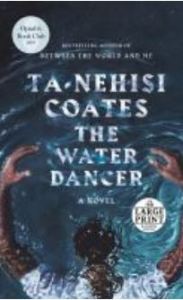
The Water Dancer by Ta-Nehisi Coates,


The Water Dancers tells the story of young Young Hiram Walker who was born into slavery in the American South.


You can request a copy of the book by clicking on the book cover which will take you to the STLS Catalog, StarCat:


The current reading list may be accessed via the following link

Adult Book Club Reading List Late Winter To Spring 2020


Happy Reading!

Linda Reimer, SSCL